
Food & Beverage
EEC-FLT-069
Grade/class: ST · Rating: 100%; DP 0.03 shown · Construction: Dust filtration stage · Size/range: CFM/type table in catalogue · Applications: Compressed air
View productIndustry
Air and process filtration for hygienic production, packaging, utilities, and storage environments.
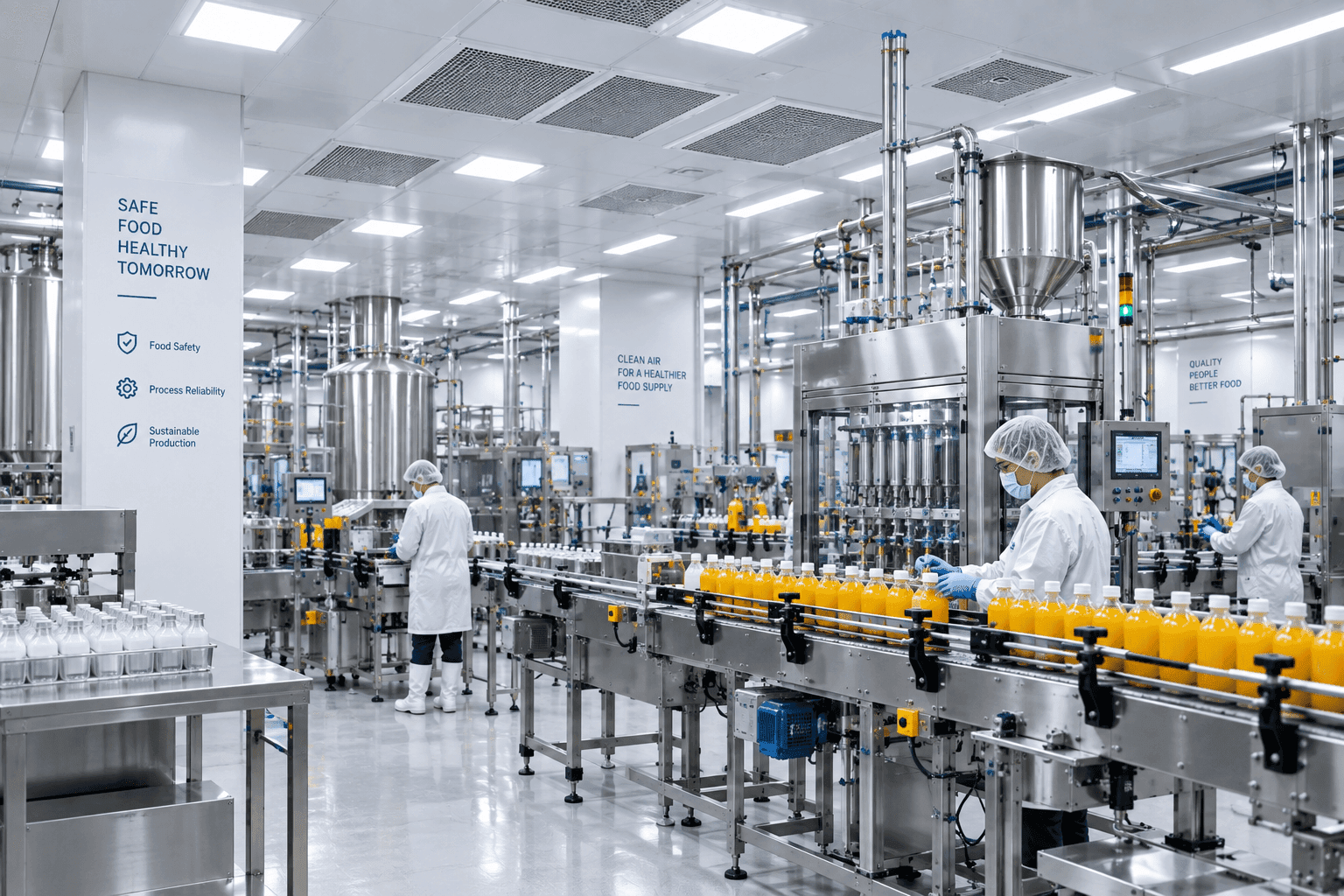
Food and beverage facilities use air filtration to protect product from airborne contamination, support hygienic zoning between raw and finished-product areas, and manage dust, moisture, and odour generated by processing, packaging, and cleaning operations.
Processing and packaging areas commonly use pre-filter and fine-filter stages sized for the space's hygiene classification, with HEPA terminal filtration reserved for higher-risk zones such as aseptic filling. Dust collection systems handle flour, powder, or ingredient dust from mixing and packaging lines, and odour or fume extraction may use activated-carbon stages where processing generates strong odours.
Media and frame materials need to suit the facility's washdown and sanitation regime, and filters in food-contact-adjacent zones may need to meet specific hygiene or food-safety expectations set by the facility's own quality system. EEC can review construction and media against a stated hygiene zone and cleaning method; referencing a food-industry use here does not state that a configuration meets a specific food-safety certification unless separately confirmed.
Applications
Products
Engineering support